Part 1: Integrated Lighting and Window Treatments
CONTROLS & AUTOMATIONOne button for the whole room.
In most homes, lighting and window treatments are planned by different trades and controlled by different devices. The result is a bank of switches by the door, a separate remote for the shades, and clients who stop using both.
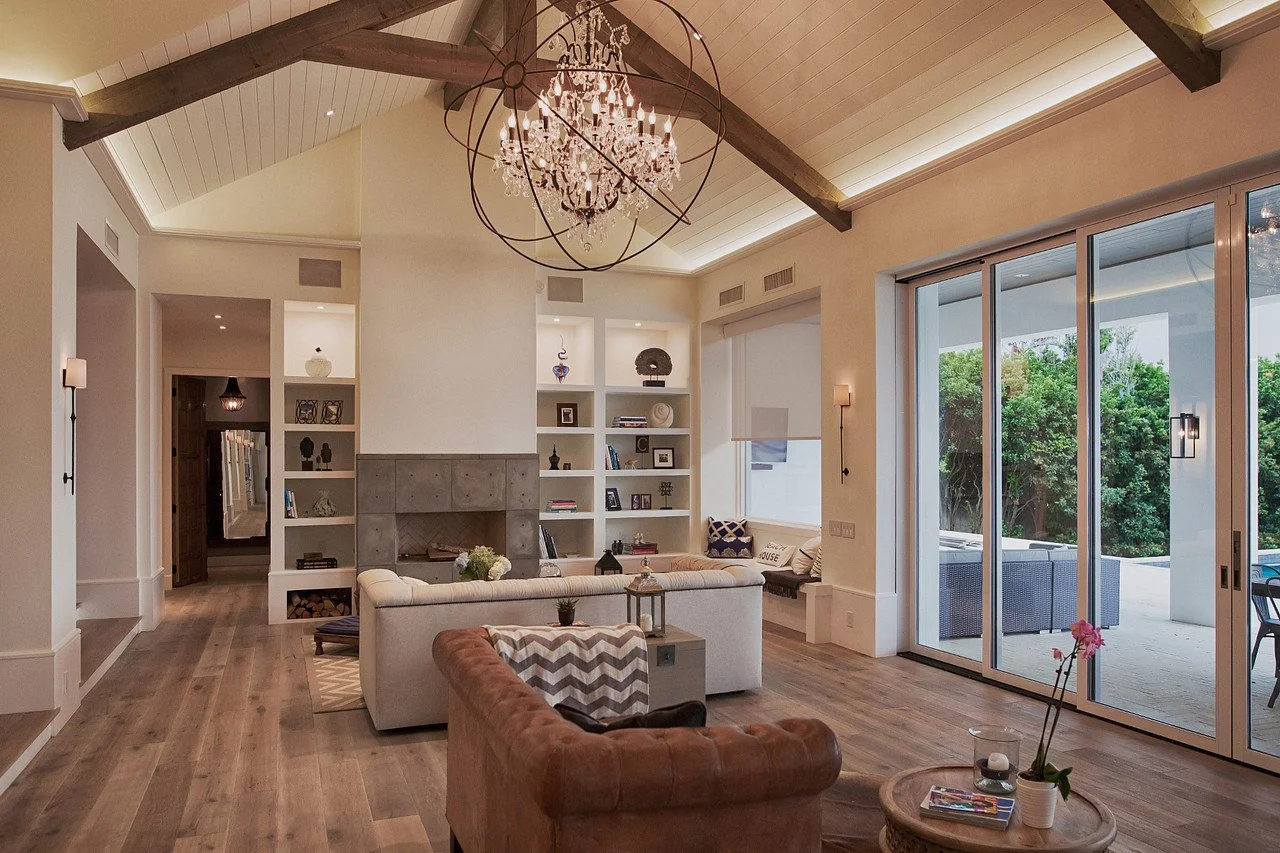
When lighting, shades and drapery are on one control system, a single keypad button sets the whole room. That is what we mean by integration, and it starts on the drawings, long before anything is programmed.
-
A typical living room can have six or more lighting zones and several motorized windows. Without integration, each has its own control: a gang of dimmers, a shade keypad, a drapery remote, an app. Clients rarely learn them all, so rooms end up lit the same way every day and shades stay where they were last left.
The fix is not more controls. It is fewer, smarter ones that think in scenes.
-
A scene is a saved setting for every light and window treatment in a room, called up with one press.
Morning: shades open, lights off, the room lit by daylight.
Dinner: sheers closed, ambient light low, accent and decorative light up.
Movie: blackout drapery closed, every light off except step lights.
Goodnight: every window closed and every light in the house turned off.
Scenes are named for how people live, not for the equipment, and they are engraved on the keypad buttons.
-
Integrated systems also run on schedules. An astronomic timeclock knows sunrise and sunset for the home’s location every day of the year.
Shades on sun-facing glass can lower before direct sun reaches the art or the floors. Drapery can close at dusk as the evening lighting comes up. Bedroom blackout layers can open gently at a set time on weekdays. The home looks after itself, and anyone can still override a scene at the keypad.
-
Roller shades are precise daylight tools. A sheer or solar shade cuts glare and protects furnishings while keeping the view. A blackout shade closes a room fully.
Motorized drapery brings softness, scale and acoustic warmth, and it can carry blackout lining.
Many windows use both: a sheer shade for the day and a drapery layer for the evening. On one system, a single button can move each layer to its own position.
-
Integration is decided early in a project. These items need to be settled before walls and ceilings close:
Keypad locations at entries, beds and seating areas.
Scene names for each room.
Power at every shade and drapery motor.
Ceiling pockets and recesses for shades and drapery tracks.
Which windows move together as one group.
Wired or wireless control for each device.
-
Lighting zones on the reflected ceiling plan, labeled by layer.
Shade and drapery groups by window, with the treatment type for each.
Keypad locations with proposed button engravings.
Motor and power locations for every motorized treatment.
Pocket and track dimensions, coordinated with downlights and wall washers.
A short scene list for each main room.
Plan the whole room with one team.
The Integrated Workroom designs the lighting, makes the window treatments and programs the Lutron system, so every scene is planned by one team. Bring us your next project, or book our accredited CEDIA CEU class for your firm.