Part 1: Integrated Lighting and Window Treatments
CONTROLS & AUTOMATIONThe part of the system everyone touches.
The best lighting and shade control is mostly invisible: processors in a closet, drivers above the ceiling, motors in a pocket. What clients and guests see is the keypad on the wall. It is touched every day, it sits beside finished millwork and hardware, and it decides whether the whole system feels effortless or confusing.
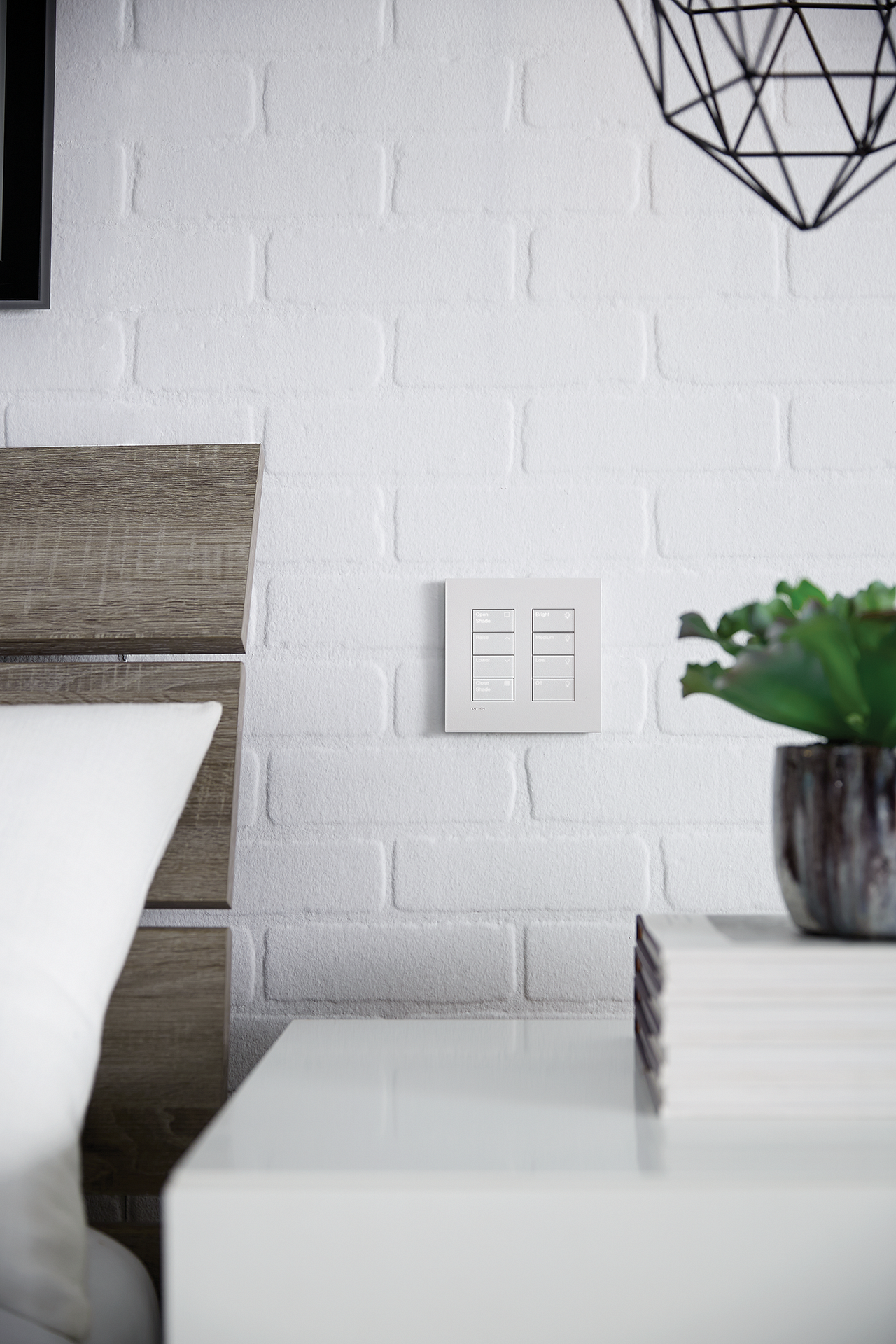
That makes the keypad a design decision, not just a technical one. Placed well, finished to match the room and engraved in plain words, a single keypad replaces a bank of switches and makes every scene easy to find.
-
Without a control system, a large room can need six or more dimmers at a single entry, plus shade controls. With one, the same room is run from one keypad with a few clearly labeled buttons.
The goal is fewer, better devices: one keypad at each place a person naturally reaches for the light, each showing only the scenes that matter there.
-
Entries: at the main door to each room, on the latch side, at a consistent height across the house.
Beds: on both sides, with scenes for reading, night and Goodnight.
Seating areas: in large rooms, a keypad near the sofa saves a walk to the door.
Kitchens: near the main work area, not hidden behind an appliance.
Back of house: garage, mudroom and service entries, often with Arrive and Leave scenes.
Avoid placing keypads where furniture, art or open doors will cover them, and coordinate with the lighting so a keypad never sits in the middle of a wall wash.
-
Keypads are available in a wide range of finishes, so they can read as part of the architecture.
Palladiom: a refined, minimal look in architectural metals, matte colors and glass, popular in modern interiors.
Alisse: hand-finished solid brass with precision-etched engraving, suited to traditional and transitional rooms with fine hardware.
Sunnata: a clean, simple look in a broad range of colors that works with both RadioRA 3 and HomeWorks.
Palladiom and Alisse are part of the HomeWorks system, so the keypad style you want can help decide which system fits the project. We match keypad finishes to door hardware and outlet plates room by room.
-
Each button is engraved, so anyone in the house can use the system without instructions. Good engraving uses short words that describe the moment, not the equipment.
Good: Bright, Dinner, Relax, Movie, Goodnight, Shades.
Avoid: Zone 3, Cans 50%, Scene B.
Keep the same scene names in every room so the system feels consistent. The top button usually sets the room to its main scene, and the bottom button turns the room off.
-
More buttons do not make a better keypad. Most rooms need three to five scenes plus Off. Bedrooms often add a shade button and Goodnight. Entries can add a whole-floor or whole-house button.
If a room seems to need more, the scenes probably need simplifying. The app and schedules can handle the rarely used settings, keeping the wall clean.
-
Because lighting and shades are on one system, a keypad can control both. A bedside keypad can close the blackout drapery and dim the lights with one press. A family room keypad can lower solar shades for the afternoon.
Shade buttons can raise, lower and stop, or move to preset positions such as Privacy or Half.
-
Keypad locations: on the plans, with a consistent mounting height.
Gang size and orientation: coordinated with the trim, paneling and other wall devices.
Engraving schedule: button by button, room by room.
Finishes: the finish for each keypad, coordinated with the hardware schedule.
Backboxes: requirements confirmed before walls close, especially in stone, glass or paneled walls.
Make the controls part of the design.
The Integrated Workroom designs the lighting, makes the window treatments and programs the Lutron system, including keypad placement, finishes and engraving schedules for your drawings. Bring us your next project, or book our accredited CEDIA CEU class for your firm.