Part 1 : Custom Drapery
IN THIS LESSON
What Size Recessed Ceiling Pocket Dimensions For Custom Drapery?
Motorized drapery pockets typically require 5"–10" depth depending if it is a single track (5”) or double track with sheers and over drapes, or roller shade and drapes. It depends also on pleat type and fabric. The pocket height can vary between 5” and 12”, and must allow clearance for installation and maintenance.

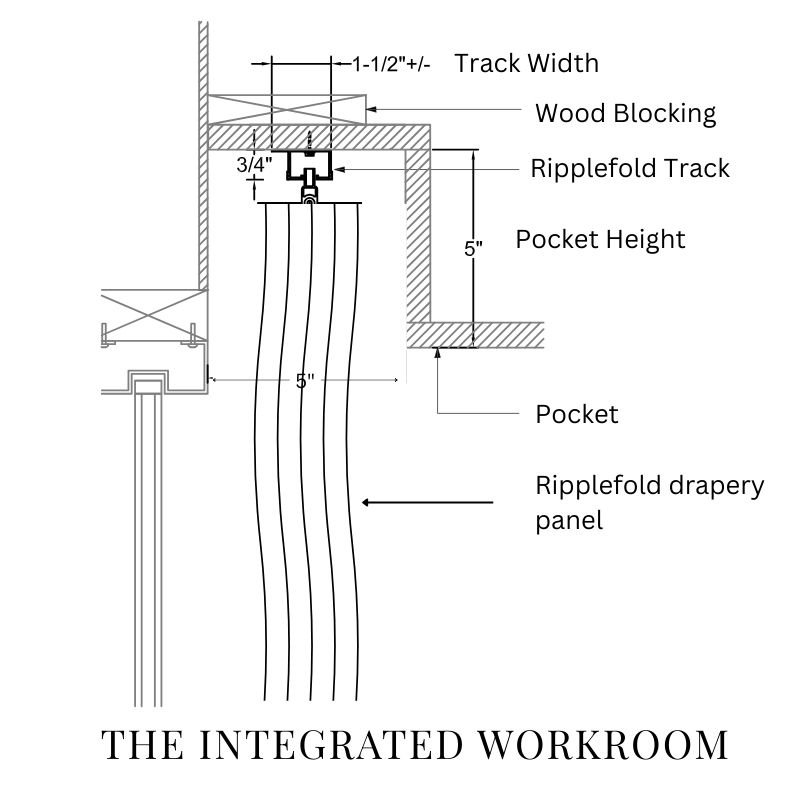
Ceiling Pocket For Single Ripplefold Drapery Track
A ceiling pocket provides a clean, architectural installation for ripplefold drapery by concealing the track and allowing the fabric to emerge seamlessly from the ceiling plane. For proper operation and appearance, the pocket should be designed with a minimum depth of 5 inches. Ripplefold drapery forms consistent 4½-inch pleats, and when the panels stack to the side they require sufficient space inside the pocket. Providing at least ¼ inch of clearance at both the front and back of the stack ensures that the fabric moves freely without rubbing against the pocket surfaces.
The pocket height should also be a minimum of 5 inches, which allows the drapery track to remain fully concealed from view while maintaining a clean ceiling line. This additional height also improves light control, particularly when using blackout drapery, by reducing light leakage above the panels.
For a secure and durable installation, it is important that wood blocking be installed above the pocket. The blocking provides the structural support required to properly anchor the drapery track and carry the weight of the drapery panels over time.
When designed with these clearances and structural considerations in mind, a ceiling pocket creates an elegant, minimalist solution that highlights the soft, continuous wave of ripplefold drapery while ensuring smooth operation and long-term reliability.
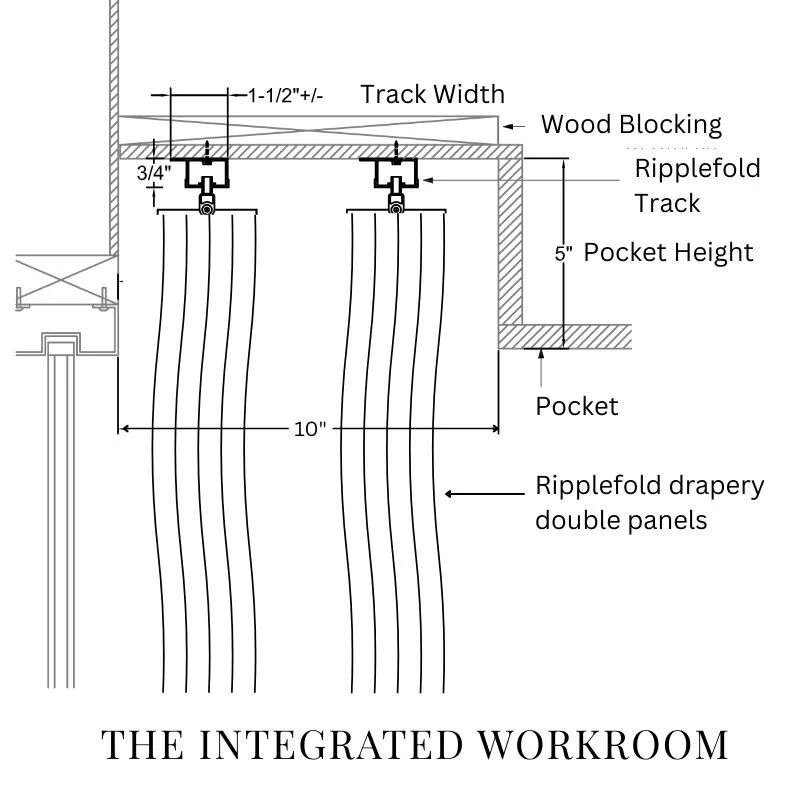
Ceiling Pocket For Double Ripplefold Drapery Track
When installing double ripplefold drapery tracks, typically used with sheer panels in the back and decorative or blackout drapes in the front, the ceiling pocket must be sized to accommodate both layers of fabric while allowing smooth operation. A minimum pocket depth of 10 inches is recommended for this configuration. Ripplefold drapery forms consistent 4½-inch pleats, and when two panels stack within the same pocket, adequate space is required to prevent the fabrics from rubbing against one another during operation. Providing sufficient depth ensures that each panel can stack properly while maintaining the clean, uniform wave that defines ripplefold drapery.
The pocket height should also be at least 5 inches so that both tracks remain fully concealed from view, creating a refined architectural appearance. This additional height also helps improve light control, particularly when the front panels are blackout drapes used in combination with sheers.
As with single-track installations, wood blocking above the pocket is essential to provide a secure anchoring point for the tracks and to support the weight and movement of the drapery over time.
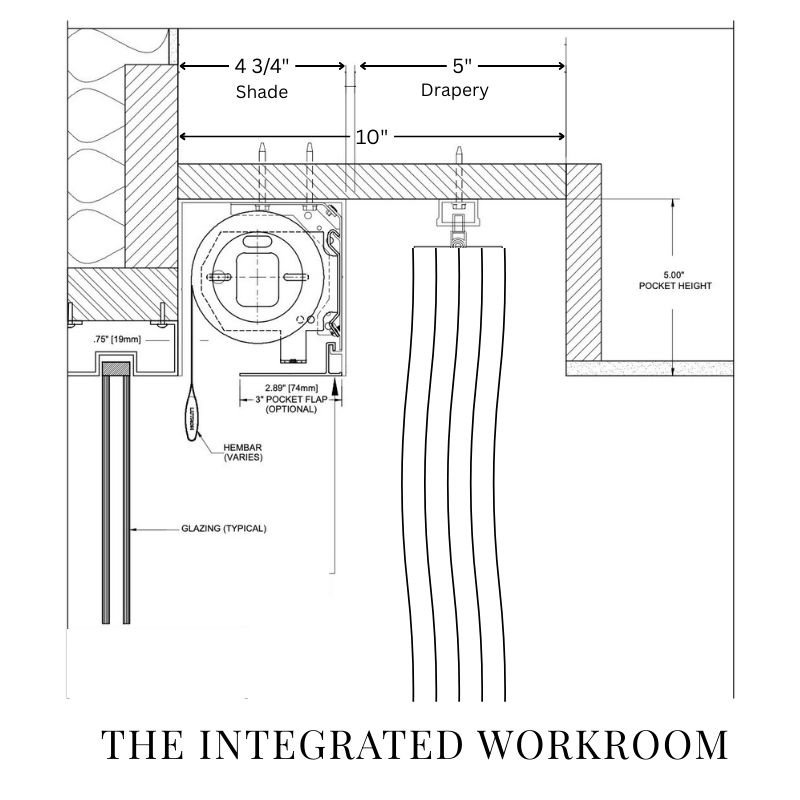
Ceiling Pocket For Motorized Roller Shade and Drapery Track
A ceiling pocket can also accommodate a motorized roller shade combined with a ripplefold drapery track, allowing designers to layer different types of light control within the same opening. This configuration is commonly used with a solar or light-filtering roller shade in the back and decorative or blackout drapes in the front, or alternatively with a blackout roller shade paired with sheer drapery panels.
The motorized roller shade is typically installed within its own integrated metal cassette or pocket measuring approximately 4¾ inches in width. In front of the shade, the ripplefold drapery requires a minimum of 5 inches of clearance to allow the panels to stack properly and move freely without interfering with the shade. This spacing ensures that the drapery pleats remain consistent and prevents the fabric from rubbing against the roller shade system during operation.
As with other ceiling pocket installations, the pocket height should be sufficient to fully conceal both the roller shade cassette and the drapery track, creating a clean architectural line at the ceiling. Proper wood blocking above the pocket is also essential to provide a secure mounting surface for both the roller shade system and the drapery track.