Part 1: Lighting Design Fundamentals
LIGHTING DESIGN FUNDAMENTALSLight that changes as the day does.
Daylight is never one color. It is cool and bright at midday, golden in the late afternoon and deep amber at sunset. Most electric light ignores this. It stays at one color all day, so a room that feels crisp at noon can feel flat and clinical at dinner.
Today's LED lighting can follow the day instead: brighter and more neutral when the room is working, warmer and softer when it is time to entertain or wind down. Planned well, it is one of the most noticeable upgrades in a finished home, and one of the least expensive to plan for at the design stage.
-
Color temperature describes how warm or cool white light looks, measured in kelvin (K). Lower numbers are warmer.
Around 1800K: candlelight and the last light of sunset.
2700K: the familiar glow of an incandescent lamp.
3000K to 3500K: warm to neutral white, common in kitchens and baths.
4000K and up: cool white, closer to midday daylight.
A home lit at a single color temperature has to pick one mood. A home that can shift has all of them.
-
Warm dim fixtures get warmer as they dim, the way an incandescent bulb did. At full output they might sit at 2700K or 3000K. Dimmed low, they glide down toward the amber of candlelight.
Warm dim is controlled with brightness alone, so it is simple to specify and simple to use. It is a strong choice for dining rooms, living rooms and bedrooms, where light is usually lowered in the evening.
-
Tunable white fixtures let color temperature and brightness be set independently. A kitchen can be bright and neutral for cooking at noon, then warm and low for a late dinner, from the same fixtures.
Because color and brightness are separate, tunable white needs a control system to make it easy. On a Lutron system, each scene stores both settings, so one button sets the right light for the moment.
-
The most advanced systems change color temperature and intensity gradually through the day, following the sun outside. Lutron Ketra is designed for this, and it runs on a Lutron HomeWorks system. Its fixtures move smoothly across a wide range of white, dim to a warm amber glow like incandescent, and can produce rich color for special occasions.
Ketra also offers a Vibrancy setting that brings out color in art, fabric and finishes without changing the overall color of the light, a useful tool in rooms with important artwork or textiles.
-
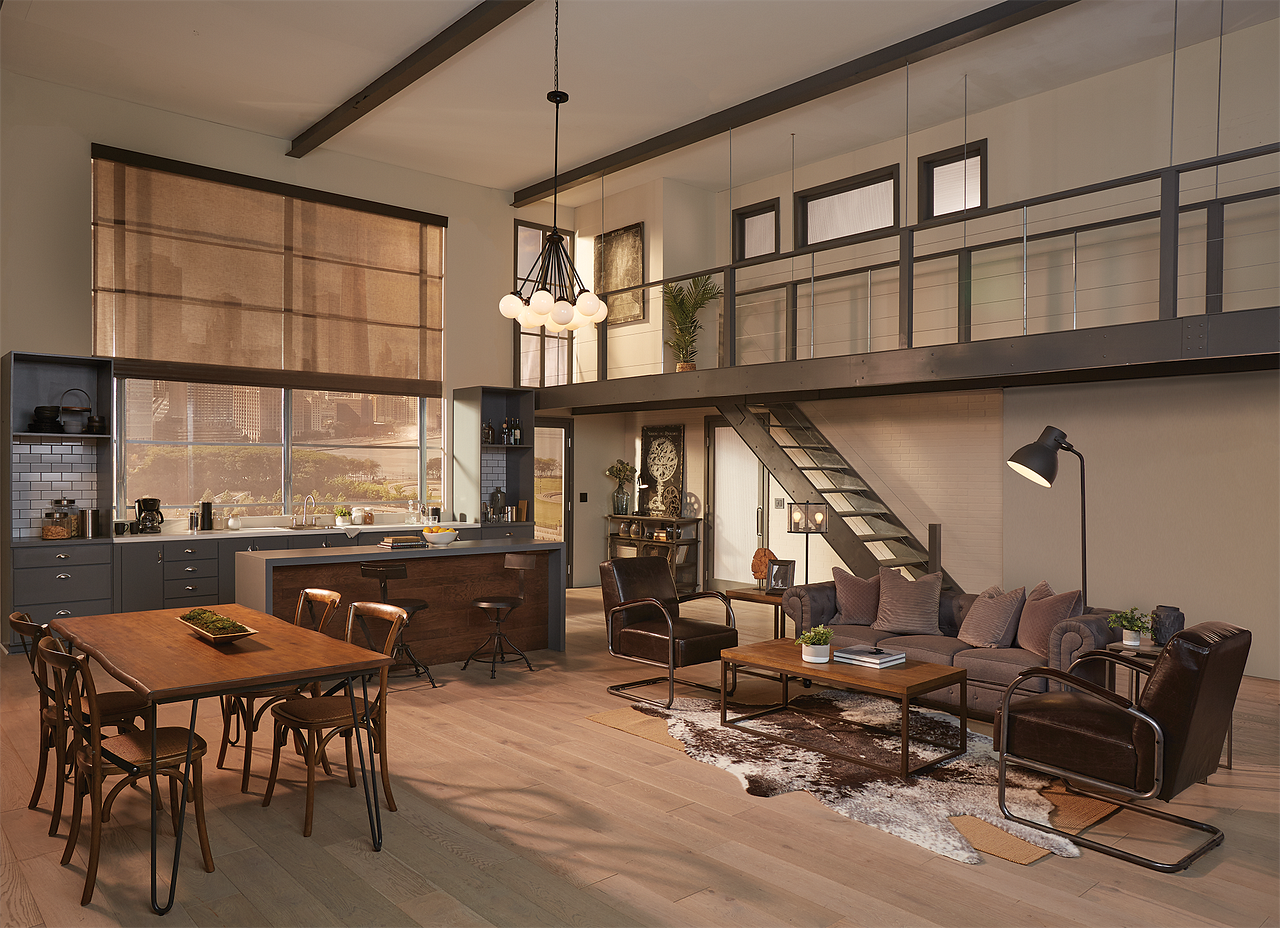
Picture a kitchen and family room with tunable lighting and motorized shades on one system.
Morning: shades open, lights cool and bright to wake the room up.
Midday: daylight does most of the work, with the electric light balanced to match it.
Late afternoon: solar shades lower on the west windows, and the light begins to warm.
Dinner: warm white at a lower level, accent light on the art, decorative light glowing.
Entertaining: warmer still, with the brightest light on the people and the table, not the ceiling.
Night: a low amber path from bedroom to kitchen, never a blast of white light.
All of it runs on a schedule, and anyone can override it at the keypad.
-
Kitchens and family rooms: the busiest rooms change mood more often than any other space.
Dining rooms: warm, low light flatters people and food.
Primary suites: cool light to start the day, warm amber at night.
Art and collections: accurate color by day, softer drama by night.
Entertaining spaces: a single Party scene can change the whole floor at once.
-
Fixture schedule: which fixtures are fixed white, warm dim, tunable white or full natural light.
Consistency: one technology within each room, so fixtures shift together and match.
Color rendering: CRI 90 or above wherever color matters.
Control zones: each tunable group zoned and coordinated with keypad locations.
Scenes: a scene list for each main room, including evening and entertaining scenes.
Shade groups: grouped by window orientation, so daylight and electric light are planned together.
Design the light around how your clients live.
The Integrated Workroom designs the lighting, makes the window treatments and programs the Lutron system, so color, brightness and daylight work together from morning to night. Bring us your next project, or book our accredited CEDIA CEU class for your firm.